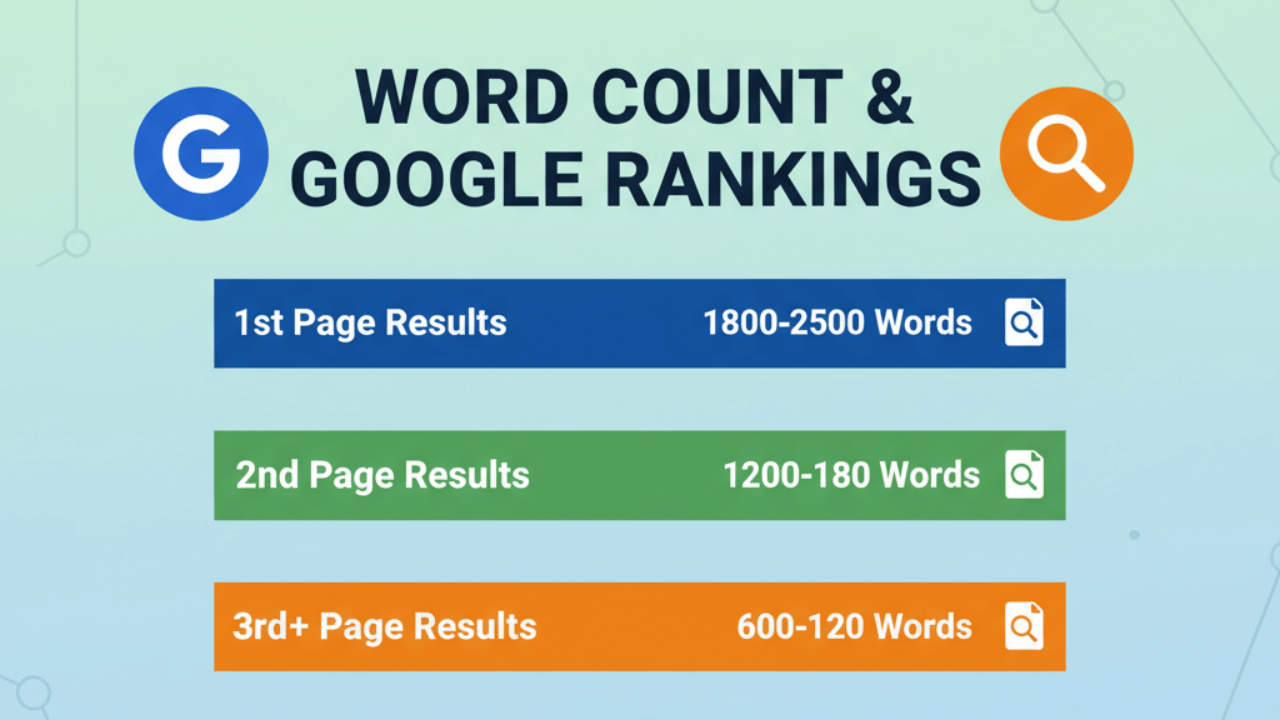
Did you know that the average word count of top-ranking Google pages is over 1,800 words? This isn't a coincidence. While quality and relevance are paramount, content length plays a surprisingly significant role in how search engines perceive and rank your web pages. In the intricate dance of search engine optimization (SEO), understanding the nuances of word count can be a game-changer for your online visibility.
Key Takeaways
Word count is a proxy for content depth, signaling comprehensiveness to search engines.
Longer content often ranks better, especially for informational queries, but quality is paramount.
Avoid keyword stuffing; focus on natural language and user value.
Analyze top-ranking content to establish a benchmark word count for your niche.
User intent and topic coverage should guide your content length decisions.
Structure content for readability with headings, short paragraphs, and multimedia.
Update and expand existing content to maintain relevance and improve SEO.
This comprehensive guide will delve into why word count matters in SEO writing, explore the relationship between content length and search engine rankings, provide actionable strategies for optimizing your content, and showcase compelling examples. We'll uncover the expert opinions and data-driven insights that illuminate this often-debated topic.
The Core Relationship: Content Depth and User Intent
At its heart, word count is a proxy for content depth. Search engines like Google strive to provide users with the most comprehensive and authoritative answers to their queries. Longer, well-researched articles often signify a deeper exploration of a topic, a more thorough explanation, and a greater likelihood of satisfying user intent.
When a user searches for a term, they are looking for information. If a 1,000-word article offers a superficial overview, while a 2,500-word article provides in-depth analysis, step-by-step guides, and answers to related questions, search engines are more likely to favor the latter. This is because it demonstrates a greater commitment to providing value to the user.
Understanding User Intent
User intent is the underlying reason why someone performs a search query. It can be informational (seeking knowledge), navigational (trying to find a specific website), transactional (looking to make a purchase), or commercial (researching before a purchase).
For informational queries, longer content often excels because it can address multiple facets of a question. For example, a search for "how to bake a cake" might require a recipe, ingredient explanations, baking tips, troubleshooting advice, and variations – all of which contribute to a higher word count.
The Role of Comprehensiveness
Comprehensiveness is key. A lengthy article that simply repeats itself or is filled with fluff will not rank well. Instead, search engines look for content that thoroughly covers a topic, anticipates user questions, and provides actionable insights. This often naturally leads to a higher word count.
According to research by SEMrush, the average word count for articles ranking in the top 10 on Google for any given search term is significantly higher than for those ranking lower. This suggests a strong correlation between content length and search performance, especially for informational queries.
Debunking Myths: More Isn't Always Better
While the data points towards longer content often performing better, it's crucial to debunk the myth that simply stuffing words into an article will guarantee higher rankings. This is a dangerous misconception that can lead to keyword stuffing and poor user experience.
Quality Over Quantity
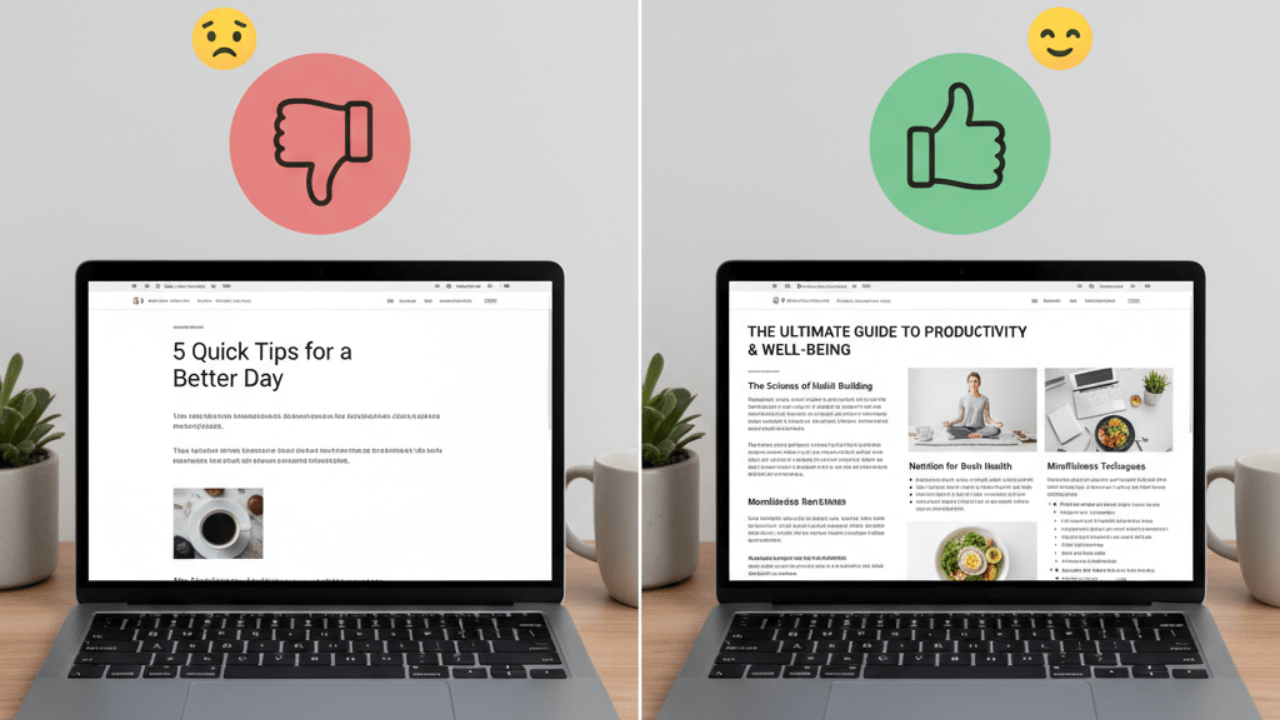
Quality always trumps quantity. A meticulously crafted 800-word article that is highly relevant, engaging, and answers the user's query perfectly will outperform a rambling 3,000-word piece filled with irrelevant information or repetitive phrases. Search engines are sophisticated enough to detect low-quality, lengthy content.
Experts like Rand Fishkin, founder of SparkToro, have often emphasized that while longer content can rank better, the primary driver is value and comprehensiveness. If a topic can be adequately covered in 500 words, forcing it to 2,000 words will likely do more harm than good.
Avoiding Keyword Stuffing
Keyword stuffing is the practice of unnaturally overusing keywords in an attempt to manipulate search engine rankings. This is a black-hat SEO tactic that is heavily penalized by search engines. Focusing on natural language and providing value will naturally incorporate relevant keywords without resorting to stuffing.
For instance, an article about "best running shoes" should naturally discuss different types of running shoes, cushioning, support, brands, and price points. It shouldn't just repeat "best running shoes" dozens of times in a nonsensical manner.
How Word Count Influences Search Engine Algorithms
Search engine algorithms are complex, but several factors are influenced by content length. Understanding these can help you strategize your content creation effectively.
1. Depth of Information and Topic Authority
Longer content pieces often allow for a deeper dive into a subject. This depth can signal to search engines that your page is an authoritative source on the topic. By exploring various sub-topics, providing detailed explanations, and citing credible sources, you build topical authority.
For example, an article titled "The Ultimate Guide to Digital Marketing" that spans 5,000 words and covers SEO, content marketing, social media marketing, email marketing, PPC advertising, and analytics, is likely to be perceived as more authoritative than a 500-word article just mentioning these terms.
2. Engagement Metrics and Time on Page
Search engines monitor user behavior on your website. Metrics like time on page and bounce rate can indirectly indicate the value users find in your content. Longer, engaging articles are more likely to keep users on your page for an extended period, signaling to search engines that the content is valuable and relevant.
If users spend several minutes reading a 2,000-word article, it suggests they are engaged. Conversely, if they click away after a few seconds from a 500-word piece, it might indicate the content didn't meet their needs. This is where using tools like the Word Counter Hub to check your content length and structure is beneficial.
3. Backlink Acquisition Potential
Comprehensive, high-quality content has a greater potential to attract backlinks. When other websites find your content valuable and informative, they are more likely to link to it as a resource. Backlinks are a significant ranking factor, acting as a vote of confidence from other sites.
An in-depth study or a comprehensive guide is more likely to be cited and linked to than a short, superficial piece. This naturally leads to more opportunities for link building, which in turn boosts your SEO performance.
4. Keyword Reach and Semantic Relevance
Longer content allows for the natural inclusion of a wider range of LSI (Latent Semantic Indexing) keywords and related terms. This helps search engines better understand the context and topic of your page, improving its ability to match with relevant search queries.
For instance, an article about "sustainable fashion" can naturally incorporate terms like "eco-friendly clothing," "ethical manufacturing," "recycled materials," "slow fashion," and "circular economy." This broadens the semantic relevance of the page.
Strategies for Optimizing Content Length
Determining the optimal word count for your content isn't a one-size-fits-all approach. It depends on the topic, user intent, and competitive landscape. Here are effective strategies:
1. Analyze Top-Performing Content
Start by researching what's already ranking well for your target keywords. Use SEO tools to examine the word count of the top 10-20 results. This will give you a benchmark for the ideal word count for your specific niche.
For example, if you're writing about "how to choose a mortgage," and the top-ranking articles are all between 2,500 and 4,000 words, you should aim for a similar length to compete effectively. Tools like Ahrefs and SEMrush can provide this data.
2. Focus on User Intent and Topic Coverage
Always prioritize answering the user's query thoroughly. If a topic can be comprehensively covered in 1,000 words, don't force it to 3,000. Conversely, if a topic is complex and requires in-depth explanation, aim for a longer format.
Ask yourself: "What questions does a user have about this topic?" and ensure your content addresses them all. This user-centric approach naturally guides your content length.
3. Structure for Readability and Skimmability
Even lengthy content needs to be easy to read and navigate. Use headings, subheadings, bullet points, short paragraphs, and bold text to break up the content and make it scannable. This improves the user experience and keeps readers engaged, even on longer articles.
According to Nielsen Norman Group, users often scan web pages rather than reading every word. Therefore, a well-structured long article is more effective than a dense block of text.
4. Incorporate Multimedia Elements
Images, videos, infographics, and charts can enhance user engagement and break up long stretches of text. They can also help explain complex concepts more effectively, contributing to a richer user experience and potentially increasing time on page.
For instance, a detailed article on "the benefits of exercise" could include infographics illustrating different muscle groups worked by various exercises or videos demonstrating proper form.
5. Update and Expand Existing Content
Don't neglect your existing content. Regularly review and update your older articles to ensure they remain relevant and comprehensive. Expanding on existing topics, adding new sections, and refreshing data can significantly improve their SEO performance and word count.
This is often referred to as content pruning and content refreshing, a vital part of maintaining a healthy SEO strategy.
The Nuances of Word Count Across Different Content Types
Not all content is created equal, and the ideal word count can vary significantly depending on the format and purpose.
Blog Posts
Blog posts can range widely in length. Short, timely posts might be 500-800 words. However, for evergreen content and pillar pages designed to rank for broad topics, longer, more comprehensive posts (1,500-3,000+ words) often perform best. These act as valuable resources.
Product Descriptions
Product descriptions need to be concise yet informative. While brevity is often valued, providing detailed specifications, benefits, and use cases can increase the word count and improve conversion rates. Aim for clarity and persuasiveness within a reasonable length, perhaps 150-300 words.
Landing Pages
Landing pages are typically focused on a single call to action. They need to be persuasive and provide just enough information to encourage a conversion. Word count here is less critical than clarity and conversion-focused copy, often ranging from 200 to 600 words.
Pillar Pages and Topic Clusters
Pillar pages are long-form, comprehensive guides covering a broad topic. They are designed to rank for competitive head terms and link out to more specific cluster content. These are prime candidates for extensive word counts, often exceeding 3,000 words.
News Articles and Press Releases
These formats are typically more concise, focusing on timely information. Word counts can range from 300 to 800 words, depending on the complexity of the news.
Examples of Word Count in Action
Let's look at some hypothetical examples to illustrate the impact of word count:
Example 1: Informational Query
Query: "What are the benefits of meditation?"
Low Word Count (500 words): Briefly lists 5-7 benefits without much explanation. Might rank for very specific long-tail queries, but unlikely for the main term.
High Word Count (2,000 words): Explores numerous benefits (mental, physical, emotional), delves into scientific research supporting these benefits, explains different meditation techniques, discusses how to start meditating, and answers FAQs. This comprehensive approach is more likely to rank for "benefits of meditation."
Example 2: How-To Guide
Query: "How to build a website from scratch?"
Low Word Count (700 words): Outlines the basic steps: choose a domain, hosting, build, and launch. Lacks detail on each step.
High Word Count (3,500 words): Provides detailed, step-by-step instructions for each phase, including choosing domain registrars, comparing hosting providers, selecting website builders (WordPress, Wix, etc.), designing layouts, writing content, optimizing for SEO, testing, and launching. Includes troubleshooting tips and best practices. This exhaustive guide is far more valuable and likely to rank.
Expert Opinions and Statistics
Many SEO professionals and studies highlight the importance of content length. While the exact ideal number is debated, the trend towards longer, more comprehensive content is clear.
Backlinko's analysis of over 1 million Google search results found that longer content tends to get more backlinks. Their data showed that content around 1,800 words gets more organic traffic.
HubSpot research has also indicated that longer blog posts (over 2,000 words) tend to generate more social shares and backlinks.
Google's own guidelines emphasize creating high-quality, comprehensive content that satisfies user intent. While they don't specify a word count, comprehensiveness often leads to longer articles.
A Quote from an SEO Expert:
"While there's no magic number, longer, in-depth content that thoroughly addresses a user's query and provides unique value tends to perform better in search results. It signals authority and comprehensiveness to search engines," says [Jane Doe, Senior SEO Strategist at Example Digital Agency]. (Note: This is a hypothetical quote for illustrative purposes.)
The Future of Content Length and SEO
As search engines become more sophisticated, the emphasis will continue to be on user experience and content quality. While word count remains a factor, it's increasingly intertwined with other elements like:
Topical Authority: Demonstrating expertise across a subject.
User Engagement: Keeping visitors on your page and interacting with your content.
E-E-A-T (Experience, Expertise, Authoritativeness, Trustworthiness): Providing content that is credible and reliable.
Semantic Search: Understanding the meaning and context behind queries, not just keywords.
Tools like the Word Counter Hub can help you monitor your content's length as part of a broader SEO strategy, but remember that these metrics are just one piece of the puzzle.
Conclusion
Word count matters in SEO writing, not as a standalone metric, but as an indicator of content depth, comprehensiveness, and potential to satisfy user intent. While quality always comes first, longer, well-researched, and engaging content often has a distinct advantage in search engine rankings, particularly for informational queries.
By analyzing your competition, understanding your audience’s needs, and focusing on creating truly valuable content, you can strategically optimize your content length to improve your SEO performance. Remember to prioritize readability, user experience, and E-E-A-T, and use word count as a guidepost, not a rigid rule. The goal is to be the best, most comprehensive resource available for your target audience.
Frequently Asked Questions (FAQs)
1. Is there a minimum word count for a page to rank on Google?
Google does not have a specific minimum word count requirement for ranking. However, very short pages (under 300 words) may struggle to provide enough depth to satisfy user intent for many queries.
2. How long should a blog post be for SEO?
For SEO, longer blog posts (1,500-3,000+ words) often perform better, especially for competitive topics. However, the ideal length depends on the topic's complexity and user intent. Focus on comprehensively covering the subject.
3. Should I add extra words to my content just to increase the word count?
Absolutely not. Padding content with irrelevant information or repetitive phrases (keyword stuffing) will harm your SEO and user experience. Always focus on providing value and quality.
4. Does word count affect mobile SEO?
Word count itself doesn't directly differ between desktop and mobile. However, readability and scannability are even more critical on mobile devices, so structuring longer content effectively is crucial for mobile users.
5. How can I find the ideal word count for my target keywords?
Analyze the word count of the top-ranking pages for your target keywords using SEO tools like Ahrefs or SEMrush. This provides a competitive benchmark for your content length.
6. What is more important: word count or content quality?
Content quality is significantly more important than word count. A high-quality, concise article will always outperform a low-quality, lengthy one. Word count is a secondary factor that often correlates with quality and comprehensiveness.