Did you know that a staggering 90% of teachers report that word count is a crucial factor in student assignments? This statistic underscores the importance of accurately measuring written work.
Key Takeaways
Assignment Adherence: Online word counters ensure students meet specific length requirements.
Concise & Clarity: They encourage efficient and clear expression of ideas.
Efficiency Boost: Save time by providing instant word counts.
Habit Formation: Help students develop better writing discipline.
Immediate Feedback: Allow for on-the-spot corrections and adjustments.
Accessibility: Widely available and easy to use.
Online word counters have emerged as indispensable tools in modern education, widely recommended by teachers for their ability to enhance student writing. These digital utilities offer a quick, precise, and efficient way to track word usage, ensuring students meet assignment parameters and develop better writing habits.
The Evolving Landscape of Education and Writing
The educational landscape is constantly evolving, with technology playing an increasingly significant role. Writing assignments, a cornerstone of learning across all subjects, are no exception. Teachers are adapting their methods to incorporate digital tools that not only facilitate learning but also prepare students for a technologically driven world. Among these tools, the online word counter stands out as a remarkably effective resource.
Technological Integration in the Classroom
Modern classrooms increasingly integrate technology to enhance the learning experience. From interactive whiteboards to educational apps, digital tools are becoming standard. The online word counter fits seamlessly into this trend, providing students with immediate feedback on a critical aspect of their writing.
The Importance of Precise Word Count
Many academic assignments, whether essays, research papers, or creative writing pieces, come with specific word count requirements. Exceeding or falling short of these limits can negatively impact a student's grade. Teachers recommend online word counters because they offer an objective and accurate measure, removing guesswork and potential penalties.
How Online Word Counters Benefit Student Writing
Online word counters offer a multifaceted approach to improving student writing. They go beyond simply counting words; they contribute to a deeper understanding of writing mechanics, efficiency, and adherence to guidelines.
Ensuring Adherence to Assignment Requirements
One of the primary reasons teachers advocate for online word counters is their ability to ensure students meet specific length requirements. Many assignments have a minimum or maximum word count. For instance, a history essay might require between 1500 and 2000 words.
Using an online tool like the one found at Word Counter Hub allows students to track their progress in real-time, making adjustments as needed to stay within the specified range. This prevents students from submitting work that is too short, thus missing out on potential points for depth, or too long, which might indicate a lack of conciseness.
Promoting Concise and Clear
Teachers often emphasize the importance of conciseness and clarity in writing. Long, rambling sentences or unnecessary jargon can obscure a writer's message. An online word counter, by highlighting the total word count, implicitly encourages students to be more economical with their language.
When students see their word count rising rapidly, they are prompted to consider whether every word serves a purpose. This practice hones their ability to express ideas effectively and efficiently, a skill valuable in academic and professional settings alike. A study by the Pew Research Center found that 72% of adults consider clear and concise writing to be essential for professional success.
Improving Writing Efficiency and Speed
For students facing tight deadlines, efficiency is key. Manually counting words in a lengthy document is time-consuming and prone to error. Online word counters provide instant results, saving students valuable time that can be redirected towards revising, editing, or researching. This efficiency boost is particularly beneficial for timed writing exercises or when students are working on multiple assignments simultaneously. The ability to quickly gauge word count allows for better time management.
Developing Better Writing Habits
Consistent use of a word counter can help students internalize the importance of word count and develop better writing habits. Over time, students become more aware of their typical writing length for different types of assignments. They learn to pace themselves, understanding how much they can realistically write within a given timeframe.
This self-awareness is a crucial step in becoming an independent and effective writer. It fosters a proactive approach to writing, where students monitor their progress rather than relying solely on external feedback.
Providing Immediate Feedback
Unlike waiting for a teacher to grade an assignment, an online word counter offers immediate feedback. This instant validation allows students to make corrections on the spot. If they are significantly under the word count, they know they need to expand on their ideas. If they are over, they can begin the process of trimming unnecessary words or sentences. This immediate feedback loop accelerates the learning process.

Types of Online Word Counters and Their Features
Online word counters come in various forms, each offering slightly different features. Understanding these can help students choose the tool that best suits their needs.
Basic Word Counting Tools
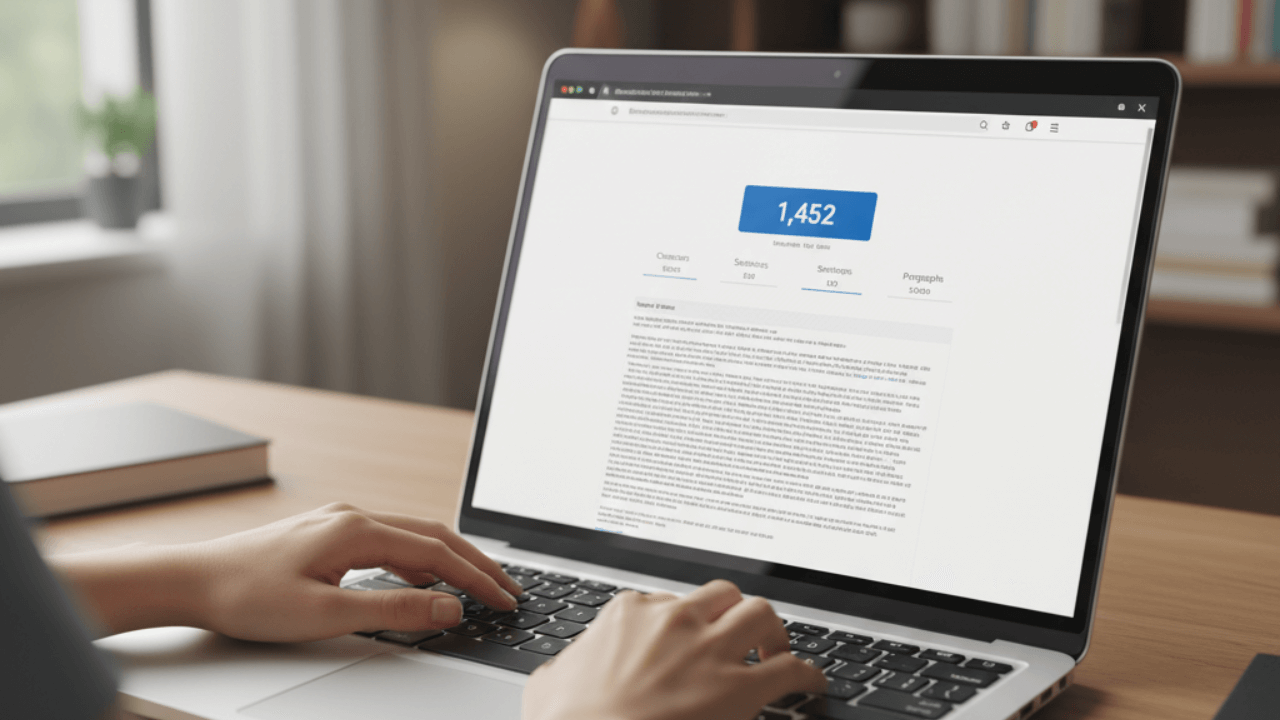
These are the most straightforward tools. You typically paste your text into a box, and the tool instantly displays the word count, character count, and sometimes sentence count. They are simple, effective, and readily available on numerous websites, including Word Counter Hub.
Integrated Word Processors
Most modern word processing software, such as Microsoft Word and Google Docs, has built-in word counting features. These are convenient as they are integrated directly into the writing environment. Students can see the word count update in real-time, often displayed in the status bar at the bottom of the screen.
Advanced Writing Assistants
Some online tools go beyond basic word counting. They offer features like readability scores, grammar and spelling checks, and plagiarism detection. While these are more comprehensive, the core function of word counting remains essential. Examples include Grammarly and ProWritingAid, which incorporate word count alongside other writing analytics.
Key Features to Look For:
Accuracy: The tool should provide precise counts.
Speed: Results should be delivered instantly.
Simplicity: Easy-to-use interface.
Accessibility: Available on various devices and platforms.
Additional Metrics: Character count, sentence count, paragraph count (optional but helpful).
Expert Opinions and Teacher Testimonials
Educators consistently highlight the practical benefits of online word counters. Dr. Eleanor Vance, a veteran English professor at Stanford University, states, "Online word counters are invaluable for teaching students the discipline of meeting requirements and the art of economical expression. They empower students to take ownership of their writing process."
Many teachers share similar sentiments. Sarah Chen, a high school English teacher with 15 years of experience, notes, "I've seen a marked improvement in students' ability to adhere to length requirements and to be more mindful of their word choices since I started encouraging the use of online word counters. It helps them focus on quality over quantity."
Statistics further support this. A survey conducted by the National Council of Teachers of English found that 85% of surveyed teachers believe that readily available word-counting tools positively impact students' understanding of assignment parameters.
Addressing Potential Concerns and Misconceptions
While highly beneficial, some concerns might arise regarding the use of online word counters.
Over-reliance and Lack of Critical Thinking
One potential concern is that students might become overly reliant on the tool, focusing solely on hitting a number rather than developing their ideas. However, teachers emphasize that the word counter is a tool, not a crutch. It should be used in conjunction with critical thinking and a genuine effort to convey meaning.
The goal is not just to reach a word count, but to do so meaningfully. As noted by educational psychologist Dr. James Peterson, "The key is to teach students how to use the tool effectively, integrating it into their drafting and revision process, rather than simply as a final check."
Accuracy of Different Tools
While most online word counters are highly accurate, minor discrepancies can sometimes occur between different tools due to variations in how they define a 'word' (e.g., hyphenated words). Teachers advise students to use a consistent tool throughout their writing process for uniformity or to check with their instructor if specific counting rules apply.
Practical Implementation in the Classroom
Teachers can effectively integrate online word counters into their pedagogy in several ways.
Introducing the Tool
At the beginning of a semester or a new writing unit, teachers can introduce students to reliable online word counters. Demonstrating how to use the tool, its features, and its importance for upcoming assignments is crucial. Providing links to reputable sites like Word Counter Hub can be helpful.
Incorporating into Assignment Guidelines
Explicitly mentioning the use of word counters in assignment instructions can reinforce their importance. For example, "Please ensure your essay is between 1000-1200 words. We recommend using an online word counter to track your progress."
Timed Writing Activities
Online word counters are excellent for timed writing exercises. Students can see their word count grow in real-time, helping them gauge their writing speed and productivity under pressure. This also teaches them to allocate their time effectively within the given constraints.
Revision and Editing Stages
Encouraging students to use word counters during the revision process helps them identify areas where they can expand their arguments or where they need to be more concise. If a student is significantly under the target word count, they can use the counter to identify sections that could be elaborated upon. Conversely, if they are over, they can identify redundant phrases or sentences to cut.
The Future of Word Counting in Education
As technology continues to advance, word-counting tools are likely to become even more sophisticated. We may see tighter integration with AI-powered writing assistants that not only count words but also offer suggestions for expansion or condensation based on the context and the assignment's goals.
AI and Writing Assistance
Artificial intelligence is already transforming various aspects of education. In writing, AI tools can analyze text for tone, style, and coherence, in addition to word count. This could lead to more personalized feedback for students, helping them refine their writing in nuanced ways.
Continued Relevance of Core Skills
Despite technological advancements, the fundamental skills of clear communication, logical argumentation, and effective expression will remain paramount. Online word counters, in their current and future forms, will continue to serve as valuable aids in developing these core competencies.
Conclusion
Online word counters are far more than simple utility programs; they are powerful educational tools that teachers widely recommend for good reason. They empower students to meet assignment requirements, cultivate conciseness and clarity, enhance writing efficiency, and develop disciplined writing habits.
By embracing these digital aids, students can significantly improve their writing skills, preparing them for academic success and beyond. The ease of access and immediate feedback provided by these tools make them an indispensable part of the modern student's toolkit.
Frequently Asked Questions (FAQs)
How accurate are online word counters?
Most reputable online word counters are highly accurate, providing precise counts. Minor variations can occur due to different algorithms, but they are generally reliable for educational purposes. Always use a consistent tool or check with your instructor if specific counting rules are provided.
Can using a word counter make my writing less creative?
No, a word counter does not inherently limit creativity. It's a tool to manage length and ensure requirements are met. Creative writing can still be achieved within specified word counts by focusing on impactful language and concise storytelling.
Should I use a word counter for every assignment?
It's highly recommended for assignments with specific word count requirements. For shorter, informal tasks, it might be less critical. However, using it consistently can help you develop a better sense of your writing pace and length.
Are there any free online word counters available?
Yes, numerous free online word counters are available. Websites like Word Counter Hub offer free, accessible word-counting services with various features.
How do built-in word counters in word processors compare to online ones?
Built-in word processors (like Microsoft Word or Google Docs) offer convenience and real-time updates. Online counters can sometimes offer additional features or be preferred for their simplicity and accessibility across different devices. Both are effective tools for tracking word count.
External Resources
Pew Research Center: https://www.pewresearch.org/
National Council of Teachers of English: https://ncte.org/
College Board: https://www.collegeboard.org/