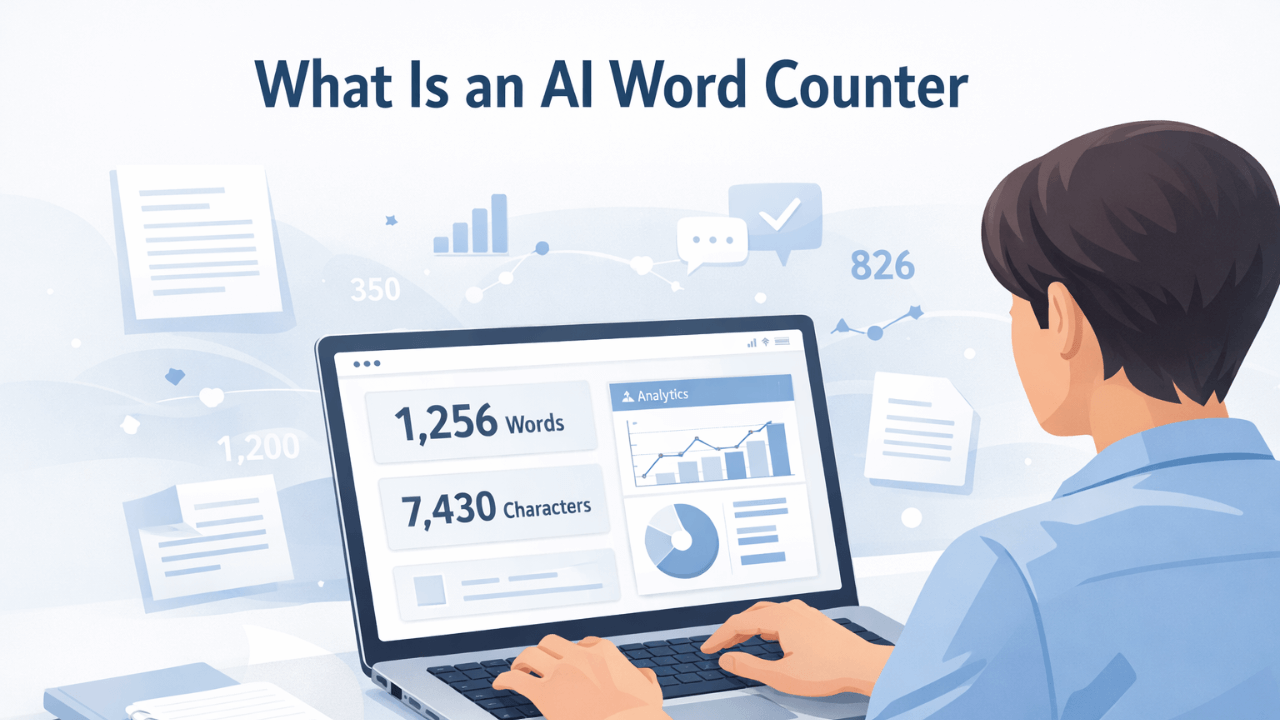
Did you know that the average person reads about 250 words per minute? Imagine if you could ensure every single one of those words you write is impactful, perfectly placed, and meets your specific goals. That’s where an AI word counter comes into play, transforming the way writers approach their craft.
Key Takeaways
An AI word counter uses Artificial Intelligence and NLP to go beyond simple word counting, offering text analysis and insights.
Key benefits include meeting word count requirements, improving readability, optimizing for SEO, and boosting writing efficiency.
Advanced features like readability scores, keyword analysis, and real-time tracking make these tools incredibly powerful.
Different content formats (social media, blogs, emails) benefit from precise word count management.
Choosing a user-friendly, accurate tool with the necessary features is crucial.
Integrating an AI word counter into your workflow involves setting goals, using real-time tracking, and leveraging advanced metrics during editing.
In today’s fast-paced digital world, content is king. Whether you're crafting a blog post, a novel, a marketing email, or a social media update, the number of words matters. It affects readability, SEO performance, and even how well your message resonates with your audience. But simply counting words is just the tip of the iceberg. Modern tools, powered by Artificial Intelligence (AI), go far beyond simple enumeration, offering insights and functionalities that can elevate your writing to new heights.
This article will delve into the fascinating world of AI word counters, exploring what they are, how they work, and most importantly, why they are becoming an indispensable tool for writers of all kinds. We’ll uncover the benefits, explore advanced features, and discuss how integrating one into your workflow can dramatically improve your efficiency and the quality of your output.
Beyond Basic Counting: What Exactly is an AI Word Counter?
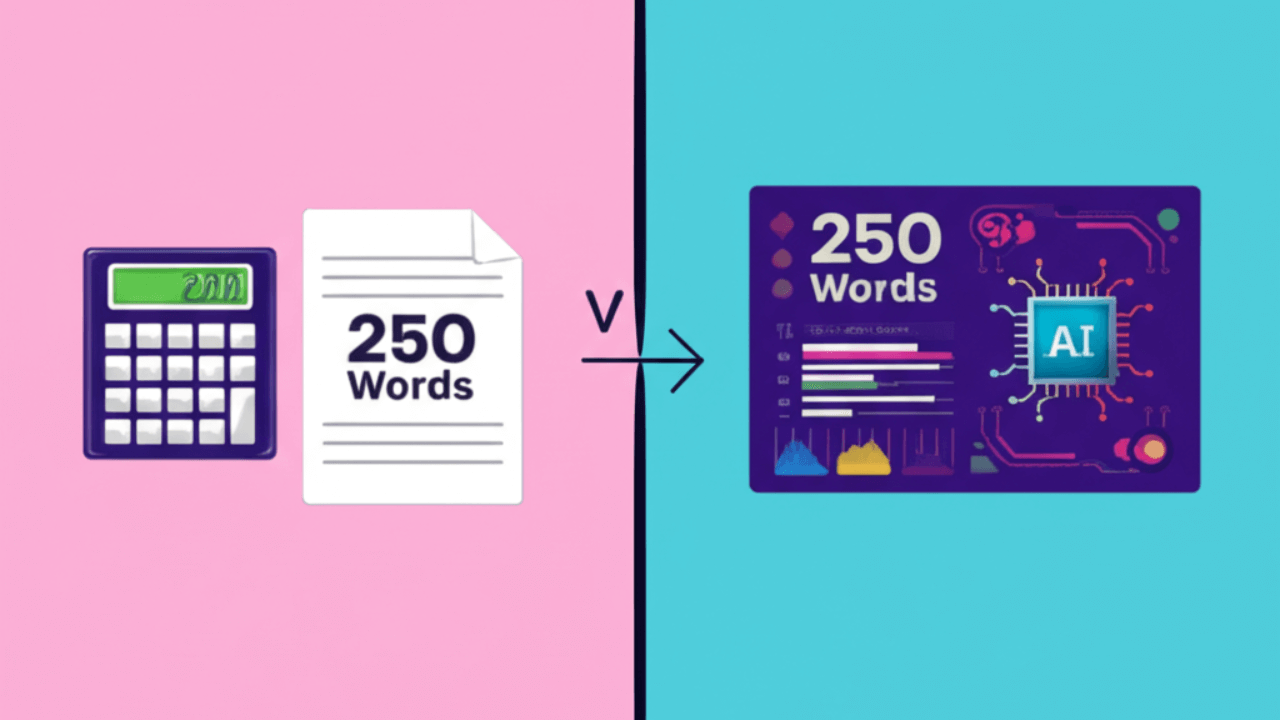
At its core, a word counter is a tool that calculates the number of words in a given piece of text. Traditional word counters, often found in word processing software like Microsoft Word or Google Docs, provide a simple numerical output. However, an AI word counter takes this a significant step further by leveraging the power of Artificial Intelligence and Natural Language Processing (NLP).
Instead of just counting, AI word counters can analyze the text in a more nuanced way. They can understand context, identify patterns, and even offer suggestions for improvement. Think of it as having a super-intelligent assistant who not only tells you how many words you've written but also provides valuable feedback on the quality and effectiveness of those words.

How AI Enhances Word Counting Capabilities
AI brings a suite of advanced capabilities to the table:
Contextual Understanding: AI algorithms can grasp the meaning of words within their surrounding sentences, understanding nuances that a simple algorithm might miss.
Natural Language Processing (NLP): This is the backbone of AI text analysis. NLP allows machines to understand, interpret, and generate human language. For a word counter, this means it can differentiate between actual words and punctuation, identify compound words, and even recognize stylistic elements.
Machine Learning: AI models learn from vast amounts of text data. This allows them to identify common writing patterns, predict potential errors, and offer suggestions based on what constitutes effective writing.
Advanced Metrics: Beyond just word count, AI tools can often provide character counts, sentence counts, paragraph counts, and even estimates of reading time. Some advanced tools can also analyze readability scores, keyword density, and sentiment.
Essentially, an AI word counter is a sophisticated text analysis tool that provides more than just a number. It offers a deeper understanding of your writing and actionable insights for improvement.
The Indispensable Benefits of Using an AI Word Counter for Writers
For anyone who writes, especially professionally, the benefits of using an AI word counter are numerous and impactful. Let’s explore why this tool should be a staple in your writing toolkit.
1. Meeting Word Count Requirements with Precision
This is perhaps the most straightforward yet crucial benefit. Many writing tasks come with specific word count limits or targets. Blog posts for certain platforms might need to be between 500 and 700 words, while academic papers or articles for specific publications have strict minimums and maximums. Exceeding or falling short of these can lead to rejection or a less effective piece.
An AI word counter provides an accurate tally, allowing you to easily adjust your content to fit the required range. Tools like the one available at Word Counter Hub offer real-time word counting as you type, making it incredibly easy to monitor your progress and stay within bounds.
2. Enhancing Readability and User Experience
Readability is paramount in online content. If your text is too dense, too long, or uses overly complex language, readers will quickly disengage. AI word counters can assist by:
Estimating Reading Time: Many AI tools provide an estimated reading time based on the word count and average reading speed. This helps you gauge whether your content is digestible for your target audience.
Analyzing Sentence and Paragraph Length: Long, convoluted sentences can be a major barrier to understanding. AI can help identify these and suggest breaking them down. Similarly, overly long paragraphs can appear intimidating.
Suggesting Simpler Vocabulary: Some advanced AI tools can flag complex words and suggest more common alternatives, improving clarity and accessibility.
According to Nielsen Norman Group, a leading authority on user experience, readability is a critical factor in user engagement and satisfaction (Nielsen Norman Group, 2023). Ensuring your content is easy to read directly impacts how much of it gets consumed and how well your message is received.
3. Optimizing for Search Engines (SEO)
For content creators aiming for online visibility, Search Engine Optimization (SEO) is non-negotiable. Search engines like Google consider various factors when ranking content, and word count is one of them. While there’s no magic number, longer, in-depth content often performs better for informational queries because it tends to be more comprehensive.
AI word counters can help you:
Track Keyword Density: Overusing keywords can lead to penalties from search engines. AI can help you monitor how often you use target keywords, ensuring they are integrated naturally.
Ensure Sufficient Depth: By helping you reach a target word count, AI tools can encourage you to cover a topic thoroughly, which is often favored by search algorithms.
Analyze Content Structure: While not strictly word counting, many AI tools that offer word count also provide insights into headings, subheadings, and overall content organization, which are crucial for SEO.
A study by Backlinko found that longer content tends to get more backlinks and organic traffic. While correlation doesn't equal causation, it highlights the importance of providing comprehensive value, which is facilitated by managing your word count effectively.
4. Improving Writing Efficiency and Speed
Time is a valuable commodity for any writer. Constantly switching between your writing environment and a separate word-counting tool can disrupt your flow. Many AI word counters are designed to be integrated directly into your writing process, offering real-time updates.
Instant Feedback: As you type, the word count updates, allowing you to stay aware of your progress without manual intervention.
Focus Maintenance: By having the count readily available, you can maintain your focus on writing and editing, rather than administrative tasks.
Streamlined Workflow: Tools that offer multiple features in one place (word count, grammar check, readability analysis) significantly streamline the writing and editing process.
5. Enhancing Editing and Proofreading
While AI word counters are primarily for counting, their underlying AI technology often extends to other writing aspects. Many tools provide:
Grammar and Spelling Checks: Catching errors is crucial for credibility. AI-powered grammar checkers are highly effective.
Style Suggestions: Some tools can identify repetitive phrasing, passive voice, or overly complex sentence structures, offering alternatives.
Plagiarism Detection: Ensuring originality is vital. Advanced AI tools can scan your text against a vast database to detect plagiarism.
By offering these integrated features, AI word counters become comprehensive writing assistants, helping you polish your work to a professional standard.
6. Managing Different Content Formats
Different platforms and purposes require different content lengths. An AI word counter is essential for adapting your writing to these varied needs:
Social Media Posts: Short, punchy updates require precise word counts. Twitter (now X), for instance, has character limits that are closely related to word counts.
Email Marketing: Subject lines and email body content need to be concise and engaging. Word count helps ensure you get your message across efficiently.
Blog Posts and Articles: As discussed, these often have target word counts for SEO and reader engagement.
Creative Writing: Novelists and short story writers may track word count for pacing, character development, and submission guidelines.
An AI word counter provides the flexibility to tailor your message effectively, no matter the medium.

Advanced Features of Modern AI Word Counters
As AI technology continues to evolve, so do the capabilities of word counters. Modern tools offer much more than just a simple word tally:
Readability Scores (e.g., Flesch-Kincaid)
Many AI word counters incorporate readability formulas like the Flesch-Kincaid Grade Level or Flesch Reading Ease. These algorithms analyze sentence length and word complexity to estimate the educational level required to understand the text. A lower Flesch-Kincaid Grade Level indicates that the text is easier to read and understand, which is generally desirable for a broad audience.
According to the U.S. Department of Education, writing at a 7th or 8th-grade reading level makes your content accessible to approximately 90% of the adult population (U.S. Department of Education, n.d.). This metric is invaluable for ensuring your message reaches as many people as possible.
Keyword Analysis and Density
For SEO-focused content, tracking keyword usage is critical. AI word counters can analyze your text to:
Identify Primary and Secondary Keywords: They can help you see if you're using your target keywords effectively.
Calculate Keyword Density: This is the percentage of times a specific keyword appears in your text. AI tools can help you maintain an optimal density, avoiding both underuse and overuse.
Suggest Related Keywords: Some advanced tools can even suggest semantically related keywords to enhance your content's relevance.
Character Count and Limits
Crucial for social media, SMS messages, and certain online forms, character counts are often provided alongside word counts. Many platforms have strict character limits, and an AI word counter ensures you stay within these boundaries.
Sentence and Paragraph Analysis
AI can break down your text to analyze the average sentence length and paragraph length. This helps in identifying areas where sentences might be too long and complex or paragraphs too dense, allowing for easier revision.
Grammar, Spelling, and Style Checks
As mentioned earlier, many AI word counters are bundled with sophisticated grammar and spell-checking capabilities. They go beyond simple error detection to offer suggestions for improving sentence structure, word choice, and overall writing style, making your content more engaging and professional.
Real-time Tracking and Integration
The best AI word counters offer real-time updates as you type. Many can also be integrated directly into your browser or writing platform, providing seamless analysis without disrupting your workflow. This immediate feedback loop is invaluable for writers who are constantly monitoring their word count.
Choosing the Right AI Word Counter for Your Needs
With a plethora of options available, selecting the right AI word counter can seem daunting. Consider these factors:
Ease of Use: The interface should be intuitive and user-friendly.
Accuracy: The word count and other metrics should be reliable.
Features: Does it offer the specific metrics you need (e.g., readability scores, keyword analysis)?
Integration: Can it be used within your preferred writing environment (e.g., browser extension, desktop app)?
Cost: Many excellent tools are free, while others offer premium features for a subscription fee.
For many writers, a versatile and accessible tool like Word Counter Hub provides a great starting point, offering a comprehensive suite of features for free.
How to Integrate an AI Word Counter into Your Writing Workflow
Integrating an AI word counter effectively can significantly boost your productivity and the quality of your output. Here’s how:
Start with a Clear Goal: Before you begin writing, know your word count target, readability goals, and any specific SEO keywords you need to include.
Use Real-Time Tracking: If your chosen tool offers real-time counting, keep it visible as you write. This allows for immediate adjustments.
Leverage Advanced Metrics During Editing: Once you have a draft, use the AI tool’s advanced features (readability scores, sentence analysis, keyword density) to refine your content.
Don't Over-rely: Remember that AI is a tool. Use its suggestions as guidance, but trust your own judgment and voice. AI can help count and analyze, but the creative spark and critical thinking still come from you.
Experiment: Try different tools and features to see what works best for your specific writing style and needs.
Conclusion: Empowering Writers in the Digital Age
In an era where content is king and precision matters, an AI word counter is no longer a luxury but a necessity for serious writers. It transcends the basic function of counting words, offering a powerful suite of analytical tools that enhance readability, optimize for SEO, improve efficiency, and elevate the overall quality of your writing.
By understanding word count requirements, leveraging readability scores, managing keyword density, and streamlining your editing process, you can ensure your message is not only heard but also understood and impactful. Tools like Word Counter Hub empower writers to meet deadlines, engage audiences, and achieve their content goals with greater confidence and ease.
Embrace the power of AI in your writing toolkit, and unlock your full potential as a communicator in the digital landscape.
Frequently Asked Questions (FAQs)
What is the difference between a regular word counter and an AI word counter?
A regular word counter simply counts the number of words in a text. An AI word counter uses Artificial Intelligence and Natural Language Processing (NLP) to not only count words but also analyze text for readability, keyword density, and sentence structure, and offer suggestions for improvement.
Can an AI word counter help me improve my writing quality?
Yes, absolutely. By providing insights into readability, sentence complexity, and suggesting alternative phrasing, an AI word counter can guide you in making your writing clearer, more concise, and more engaging for your audience.
How does an AI word counter help with SEO?
AI word counters can help with SEO by allowing you to track keyword density, ensure your content has sufficient depth (often indicated by word count), and analyze content structure, all of which are important factors for search engine rankings.
Are AI word counters accurate?
A4: Reputable AI word counters are generally very accurate in their word and character counts. Their analytical features, such as readability scores, are based on established algorithms and provide reliable indicators of text quality.
Do I need to pay for an AI word counter?
Many excellent AI word counters are available for free, offering a robust set of features. Some platforms offer premium versions with more advanced capabilities, but a free tool like Word Counter Hub is often sufficient for most writers' needs.
References
Backlinko. (2020). Content Marketing Statistics. Retrieved from Backlinko
Nielsen Norman Group. (2023). Readability: The Art and Science of Easy Reading. Retrieved from Nielsen Norman Group
U.S. Department of Education. (n.d.). Readability Formulas. Retrieved from U.S. Department of Education